The Winter Pruning Itch: What to Cut Back Now (and What to Leave Alone)
Every winter, it happens. The leaves are gone, the garden looks messy, and the pruners start calling your name. Winter is an important pruning season, it’s also one of the easiest times to make mistakes that cost you flowers in spring.
Let’s talk about what’s actually happening inside plants during winter, and how to prune with intention — not impulse.
What Happens to Plants in Winter (The Science Part)
In winter, most woody plants enter dormancy. Growth slows or stops, energy is stored in the roots, and buds are already formed for the upcoming season.
Key things to know:
Flower buds are often set months in advance
Pruning removes stored energy along with branches
Timing determines whether you’re encouraging growth — or removing blooms
This is why pruning is not one-size-fits-all.
Plants You Should NOT Prune in Winter
If a plant blooms in early spring, it almost always forms its flower buds on old wood — meaning last season’s growth. Pruning now removes those buds before they ever get a chance to bloom.
Leave These Alone Until After Bloom:
Azaleas
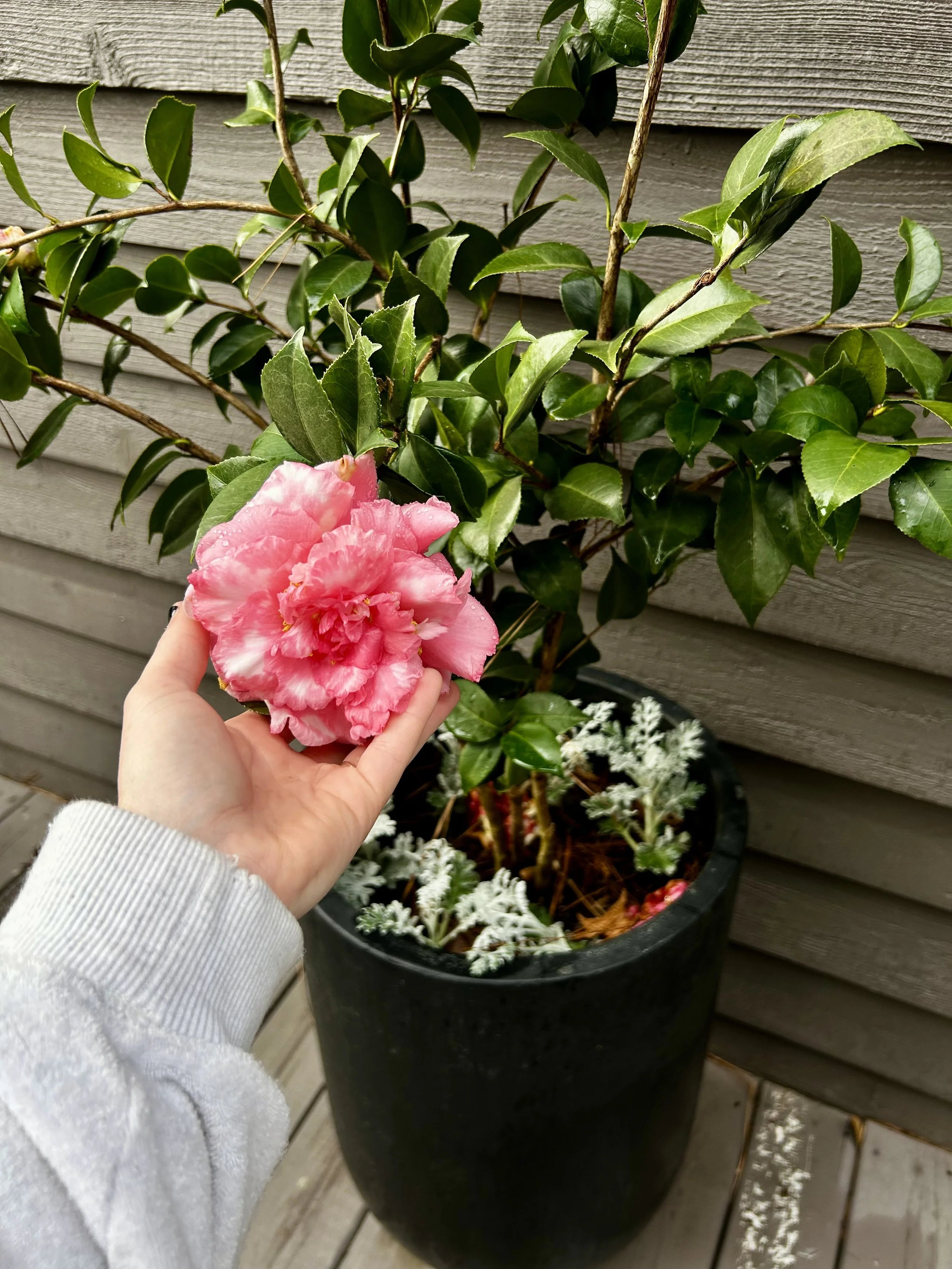
Camellias
Bigleaf & Oakleaf Hydrangeas
Loropetalum
Spirea
Rule of Thumb: If it blooms before May, wait until after it flowers to prune.
Plants That Benefit from Winter Pruning
Some plants actually need winter pruning to perform well. These either bloom on new wood or benefit from structural cleanup.
Safe (and Helpful) to Prune in Winter:
Roses — encourages strong spring growth and better flowering
Ornamental Grasses (Muhly, Fountain Grass, Switchgrass) — cut back before new shoots emerge
Crape Myrtles — selectively (no topping!!!)
Summer-Blooming Shrubs like butterfly bush and some hydrangea varieties
Perennials like Gaura, Salvia, and Coneflower
Don’t Rush to Cut Back Your Perennials
Many of these “messy” seed heads and dried stalks serve an important purpose in winter.
Why Wait?
Birds rely on dried seed heads (like coneflower, black eyed susan, and salvia) for winter food
Stems provide shelter for overwintering pollinators and insects
Frosted grasses and stalks add texture and movement to your winter landscape
Unless the plant is diseased or truly falling apart, it’s often best to wait until late February and early March to cut back your perennials. You’ll be helping wildlife and extending your garden’s beauty through the cold season.
When is the Best Time to Prune in Winter?
Too early, you risk encouraging growth during a freeze. Too late, and new buds may already be swelling.
Rule of Thumb: Wait until Valentine’s, but stop by Easter.
That’s the sweet spot for:
Pruning roses and ornamental grasses
Shaping summer-blooming shrubs
Doing structural cuts on trees while they’re still dormant
By mid-February, the worst of winter is usually behind us. By Easter, growth is beginning and pruning can set plants back.
Structural Pruning: Winter’s Biggest Advantage
Winter is an excellent time for structural pruning, especially for trees and large shrubs.
Why?
You can see the branch structure clearly without leaves
Sap flow is minimal, reducing stress
Insect and disease activity is low
This is the time to:
Remove dead or damaged limbs
Thin out crowded growth
Improve shape, airflow, and light penetration
These cuts won’t affect blooming, but they’ll pay off in plant health long-term
What About Cold Damage?
Pruning just before or after a freeze can backfire — because cuts stimulate growth, and tender growth is more vulnerable to cold.
Best practice:
Avoid pruning before hard freezes
Don’t prune immediately after ice or snow
Let slightly damaged branches protect the plant until later in the season
Common Winter Pruning Mistakes
I see these every year:
Pruning too early in a cold snap
cutting back azaleas and camellias (then wondering where the flowers went)
“Crape Murder” from topping crape myrtles
Clearing out perennials too early, robbing birds and pollinators of shelter and food
If you’re not 100% sure what a plant is — or whether it blooms on old wood vs. new wood — it’s always better to pause.
Need Help? Let’s Walk Your Garden Together
Winter pruning is about more than just tidying up — it’s about setting your garden up for success in the seasons ahead. And every cut has a consequence.
I offer winter garden consultations to help homeowners know:
What to prune and when
What to leave alone
How to prep their beds and layout for spring planting
Let’s book a walk-through while your garden is bare, so we can shape it into something even better for spring.