How I Shop Plant Stores as a Garden Designer
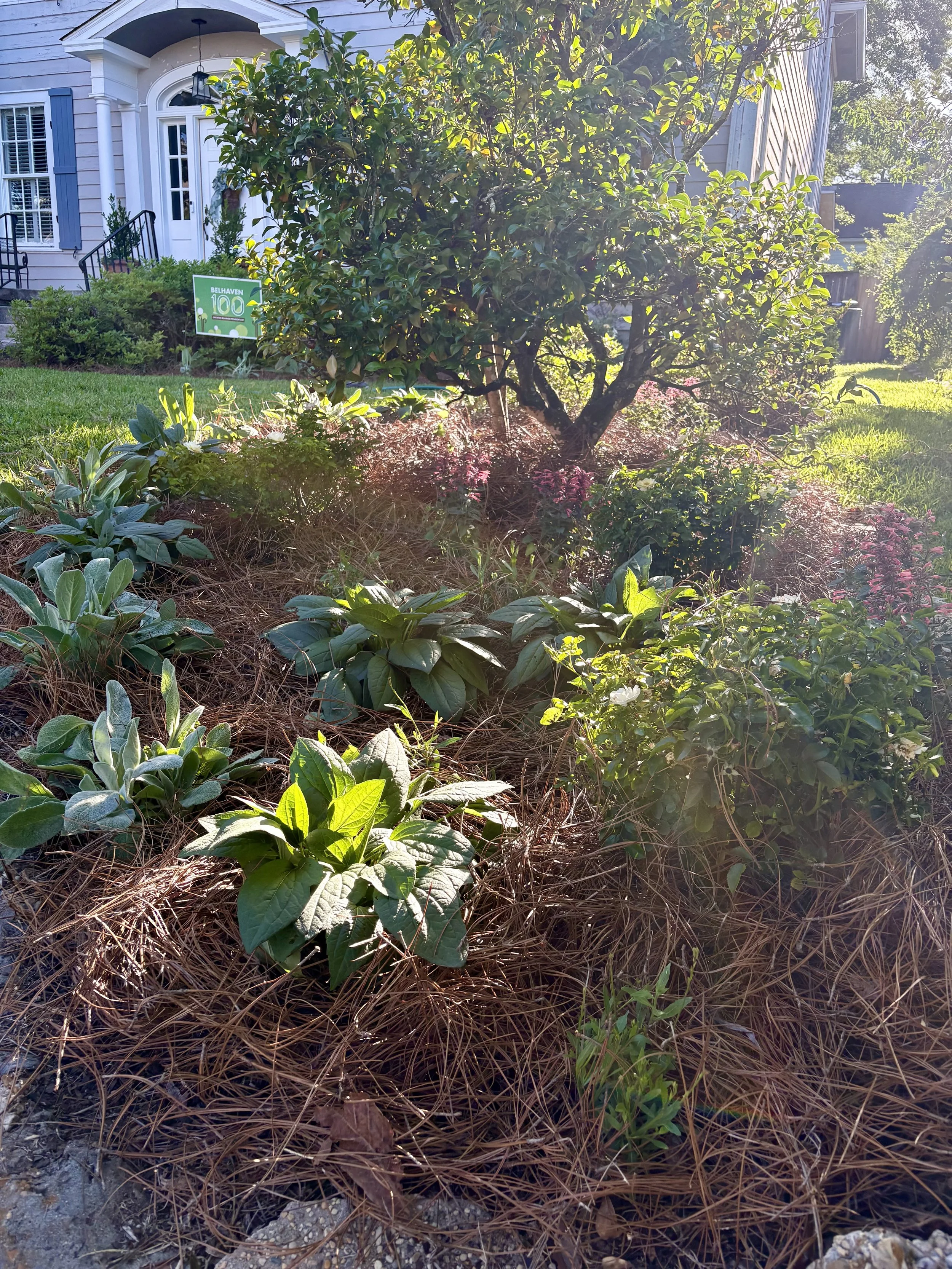
Walking into a plant nursery without a plan can get overwhelming fast. Everything is blooming, everything looks beautiful, and suddenly your cart is full of plants that may or may not actually work together once you get home.
One thing people don’t always realize about garden design is how much decision-making happens while shopping for plants. Inventory changes. Colors look different in person. Some plants are too small, too large, out of budget, or simply don’t work with everything else once they’re placed side by side.
Shopping plant stores as a garden designer isn’t just about picking pretty flowers. I’m constantly thinking about color palettes, sunlight, repetition, structure, movement, texture, mature sizing, and how all the plants will interact together once they’re planted in the landscape.
For this recent project, I went into the nursery with a simple framework already in mind: soft pinks, yellows, and whites with movement, texture, and pollinator-friendly plants. The client already had strong evergreen structure in the landscape, so I knew I could focus more on adding softness, color, and movement throughout the bed.
Here’s how the design came together in real time.
Start With a Color Palette
Before I ever start grabbing plants, I narrow down the overall color story. For this project, I focused on soft yellow, pale pink, and creamy white.
Having a limited palette immediately helps a garden feel calmer and more cohesive. One of the biggest mistakes I see people make at plant stores is buying one of every flower they love. Individually, the plants may all be beautiful, but together they can quickly start feeling chaotic.
A simple palette helps guide every decision afterward.
Some examples of color palettes I love are:
soft pink, yellow, and white for a cottage garden feel
white and green for a calmer, classic look
purple, white, and silver for a cooler evening garden palette
warm reds, oranges, and yellows for a brighter, high-energy space
blush pink, lavender, and cream for a softer romantic feel
deep reds and purples for a moodier, dramatic garden
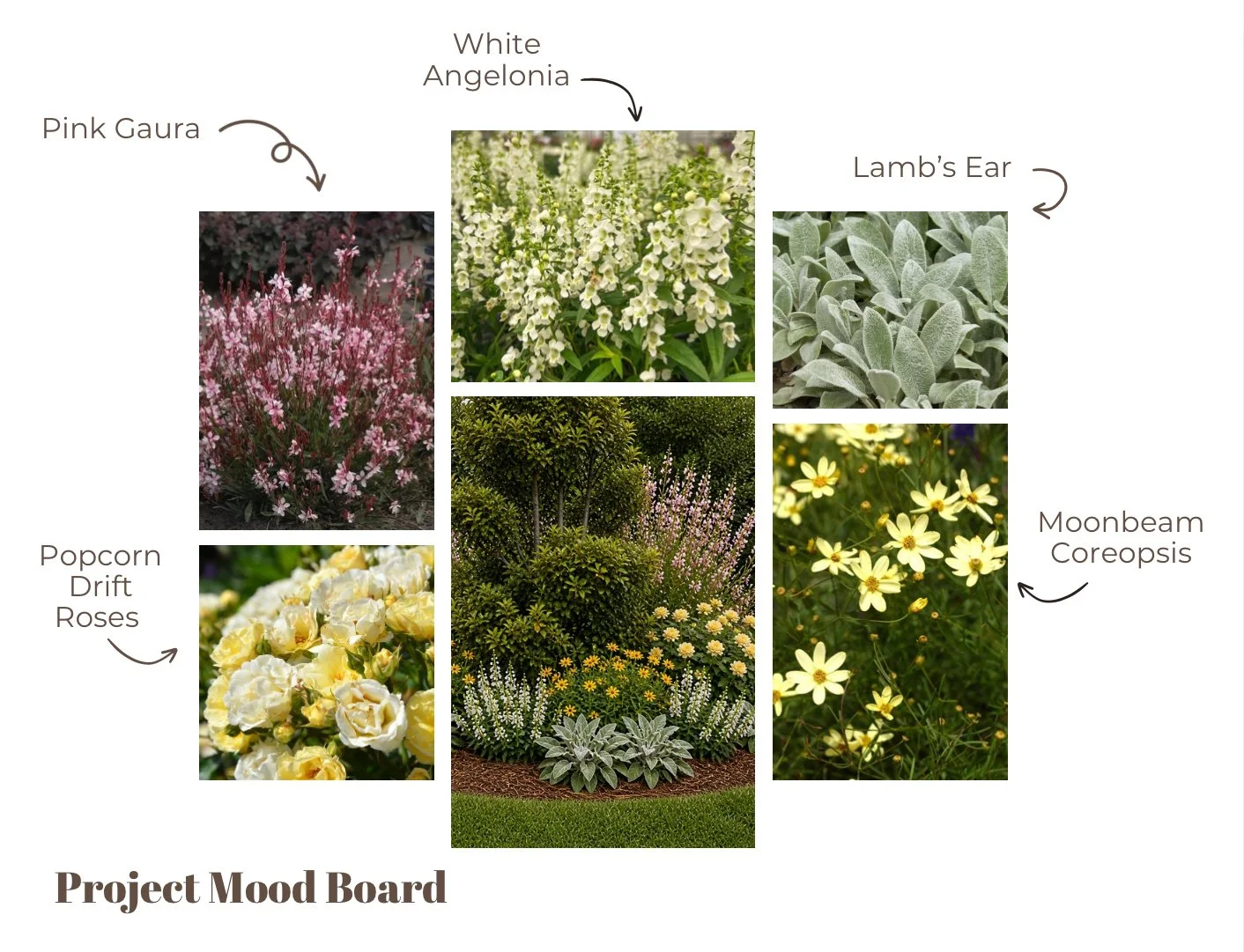
This was the original direction and palette I planned before heading to the nursery.
Don’t trust Plant Tags Blindly
One of the biggest mistakes I see homeowners make is misunderstanding sunlight requirements — especially in the South.
Morning sun and afternoon sun are completely different in Mississippi summers. A plant that thrives in full sun in cooler climates may struggle badly in our intense afternoon heat, especially in zones 8–9.
One thing I pay close attention to on plant tags is whether the plant mentions “part sun” anywhere on the label — even if it also says “full sun.” That’s usually my clue that the plant would appreciate some protection from harsh afternoon exposure in our climate.
A lot of plant tags are written to cover huge growing ranges. A plant hardy from zones 3–9 may tolerate full sun beautifully in northern climates, but still appreciate morning sun and afternoon shade here in Mississippi.
That’s why understanding your yard’s microclimates matters so much more than blindly following a plant tag.
Repetition Makes Gardens Feel Intentional
Another mistake I see people make at plant stores is buying a single one of every plant they like.
Beautiful gardens usually rely on repetition. Repeating plants throughout a bed creates rhythm, cohesion, and a calmer overall look. It also keeps gardens from feeling busy or chaotic.
For example, in a simple 15x5 flower bed, I’d usually think in odd-number masses instead of individual plants.
Maybe:
3 evergreen shrubs for structure
3–5 deciduous shrubs for long-term color
5–7 airy perennials for movement
9–12 smaller filler and border plants for softness and texture
Then I’d repeat those plants throughout the bed in grouped clusters instead of scattering single plants randomly throughout the space. That repetition helps gardens feel much more intentional and established — even when using a relatively simple palette.
Next: Movement
One thing I always look for in a garden is movement. Plants that sway or have airy textures help soften a landscape and make it feel more natural and relaxed.
Originally, I planned on using pink gaura for that soft, airy movement, but the nursery was completely out. Since movement was one of the main elements I wanted in the design, I pivoted to white gaura instead. It still gave me the flowing texture and softness I was looking for while keeping the overall palette light and cohesive.
That’s a big part of shopping plant stores strategically: understanding the role a plant plays in the design instead of only focusing on the exact plant itself.
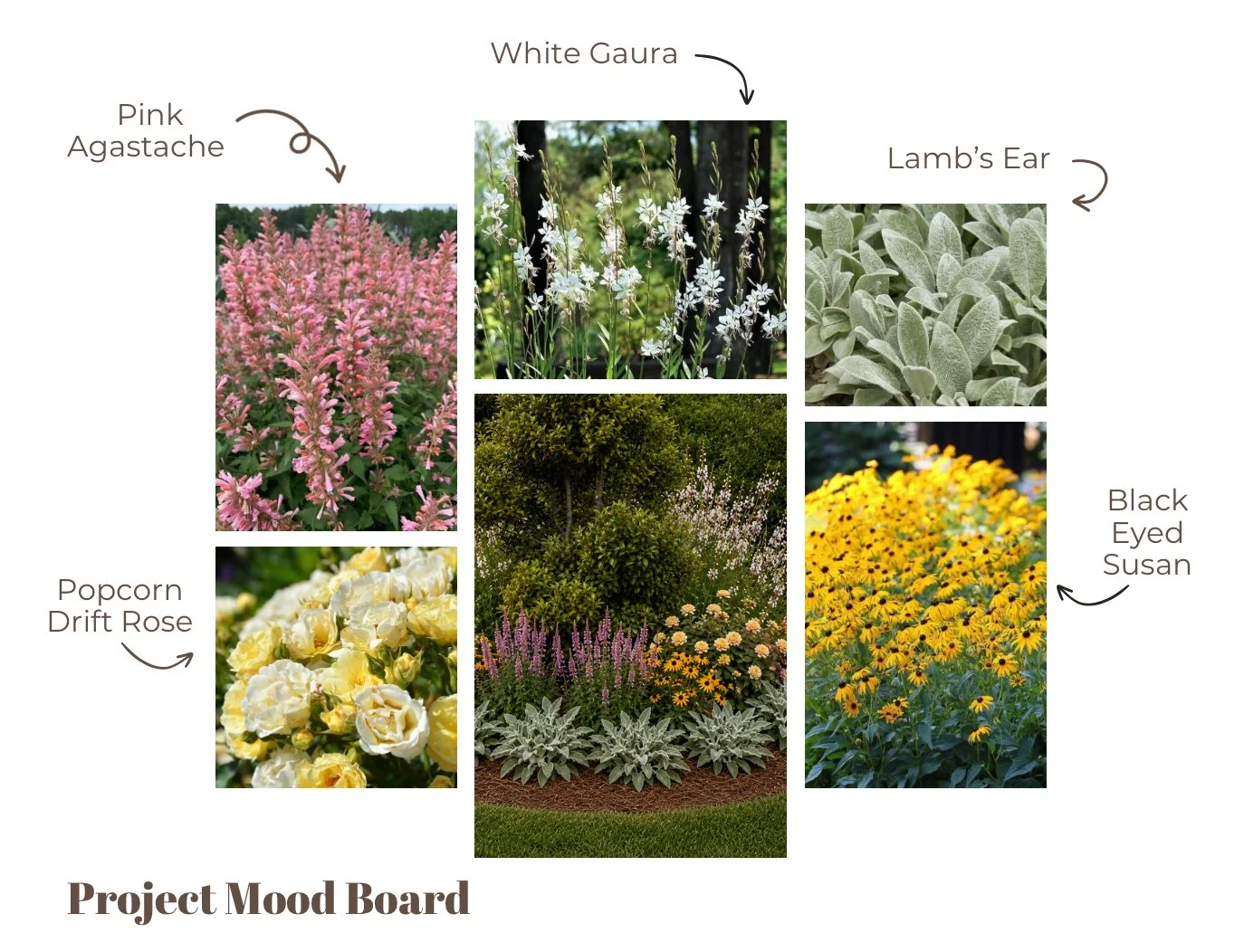
Once inventory started shifting at the nursery, the plant selections evolved while still maintaining the overall feeling and palette of the design.
Layer in Long-Term Color
Next, I needed reliable perennial color.
I already knew I wanted drift roses because they bloom heavily and help fill space beautifully over time. I chose Popcorn Drift roses because the soft buttery yellow and creamy white blooms fit perfectly with the palette.
At that point, I realized I still needed another source of pink in the bed. Since the pink gaura wasn’t available, I searched the sun-loving perennial section and eventually landed on agastache instead. It brought in beautiful color while also filling the perennial role I needed in the design.
This is something homeowners often don’t realize: good garden design usually involves constant editing and adjusting while shopping.
Look at Plants Together — Not Individually
Originally, I planned on using coreopsis for yellow. But once I started placing plants together at the nursery, the warm red centers in the blooms clashed with everything else I had already selected.
I also considered lantana, but many of the varieties in stock either felt too chaotic color-wise or the yellow tones were much harsher than the soft palette I was building.
Eventually, I landed on black-eyed Susans.
Originally, I hadn’t planned on using a yellow this bold, but several other factors started to outweigh that hesitation. The plants in stock were already large and mature, which meant I needed fewer of them to create a full, established look in the bed. They also happened to be on sale, which helped keep the project within budget.
Beyond that, black-eyed Susans checked several important boxes for the design. They’re low maintenance, excellent for pollinators, prolific bloomers through frost, and perennial, meaning they’ll continue returning and filling in over time.
I can admittedly be a little hard-headed once I have a vision in mind, but one piece of advice I got during my first year teaching has always stuck with me:
“Be like a willow, and bend.”
Honestly, garden design often requires that same flexibility.
Because the plants were already so full and established, I also didn’t need additional annuals to fill gaps in the bed.
Don’t Forget Texture
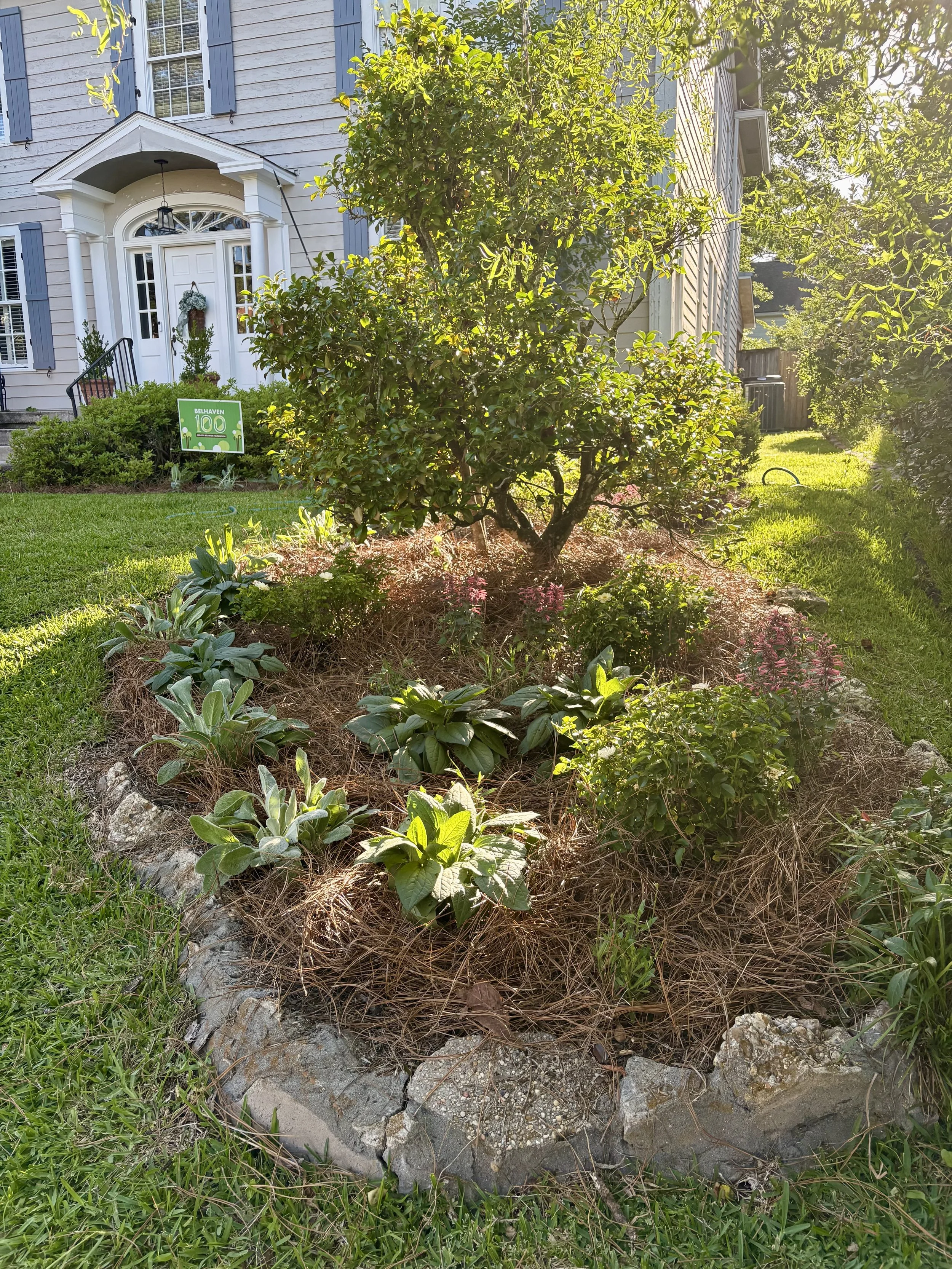
Last, I added lamb’s ear for texture and softness.
The silvery fuzzy foliage helped break up all the blooms while also tying back into the soft cottage-style feel we were creating. It also checked another important box: evergreen interest.
Even when flowers fade, textured foliage helps keep gardens interesting and layered year-round.
My Formula for Shopping Plant Stores
When I’m shopping for a project, I usually think through plants in this order:
color palette
sunlight and microclimates
repetition and plant grouping
evergreen structure
movement
long-term perennial color
annuals for temporary filler if needed
texture and contrast
And throughout the entire process, I’m constantly thinking about:
mature size
maintenance
bloom timing
pollinator value
airflow
layering
balance
and how all the plants will interact together once they’re actually planted side by side
Good garden design usually isn’t about buying the most plants. It’s about understanding how to create cohesion, movement, texture, and structure while also staying flexible when inventory, sizing, and budget change.
Some of the best gardens come from learning how to adapt while still staying true to the overall vision.
Plant stores should feel inspiring, not overwhelming. Going in with even a loose framework can help you avoid impulse buys, wasted money, and gardens that feel crowded or disconnected later on.
If you need help creating a planting plan, understanding your yard’s unique microclimates, or building a garden that works beautifully in Mississippi’s climate, Ginger Gardens currently has summer consultation openings available.